Acne Scar Treatment in Burnaby: Sylfirm X vs Microneedling vs PicoWay — Which Works for Your Scars?
Acne scars are one of the most common — and most emotionally impactful — skin concerns we treat at SkinArtMD. If you've dealt with acne, you know the frustration: you finally get your breakouts under control, only to be left with a permanent roadmap of every pimple, cyst, and nodule that ever appeared on your face.
The good news? Modern aesthetic medicine has made remarkable advances in acne scar treatment. The key to success, however, lies in matching the right treatment to the right scar type. At our Burnaby clinic near Metrotown, we offer four of the most clinically effective technologies — and we use each one for very specific indications.
Understanding Your Acne Scars: Type Matters
Before diving into treatments, you need to understand what type of scarring you have. This is the single most important factor in choosing the right approach.
Atrophic Scars (Depressed)
These are scars that sit below the skin's surface — they form when the skin doesn't produce enough collagen during healing.
Ice pick scars: Deep, narrow, V-shaped scars that extend into the dermis. They look like someone poked the skin with a sharp object. These are the most stubborn type to treat because they're deep and narrow.
Boxcar scars: Broad, rectangular or oval depressions with steep, defined edges. They look like chickenpox scars. They can be shallow or deep, and their edges are what make them visible.
Rolling scars: Wide, shallow depressions with sloping edges that create a wave-like appearance on the skin's surface. They're caused by fibrous bands tethering the skin to deeper tissue.
Hypertrophic and Keloid Scars (Raised)
These scars sit above the skin's surface, formed by excess collagen during healing. Hypertrophic scars stay within the boundary of the original wound, while keloids extend beyond it. These are more common on the jawline, chest, and back.
Post-Inflammatory Hyperpigmentation (PIH) and Erythema (PIE)
Technically not scars, but often confused with them:
- PIH (brown/dark marks): Excess melanin deposited after inflammation. More common in darker skin tones.
- PIE (red/pink marks): Damaged blood vessels visible through thin, healing skin. More common in lighter skin tones.
The Four Treatment Options Compared
1. Sylfirm X: The Precision Remodeling Powerhouse
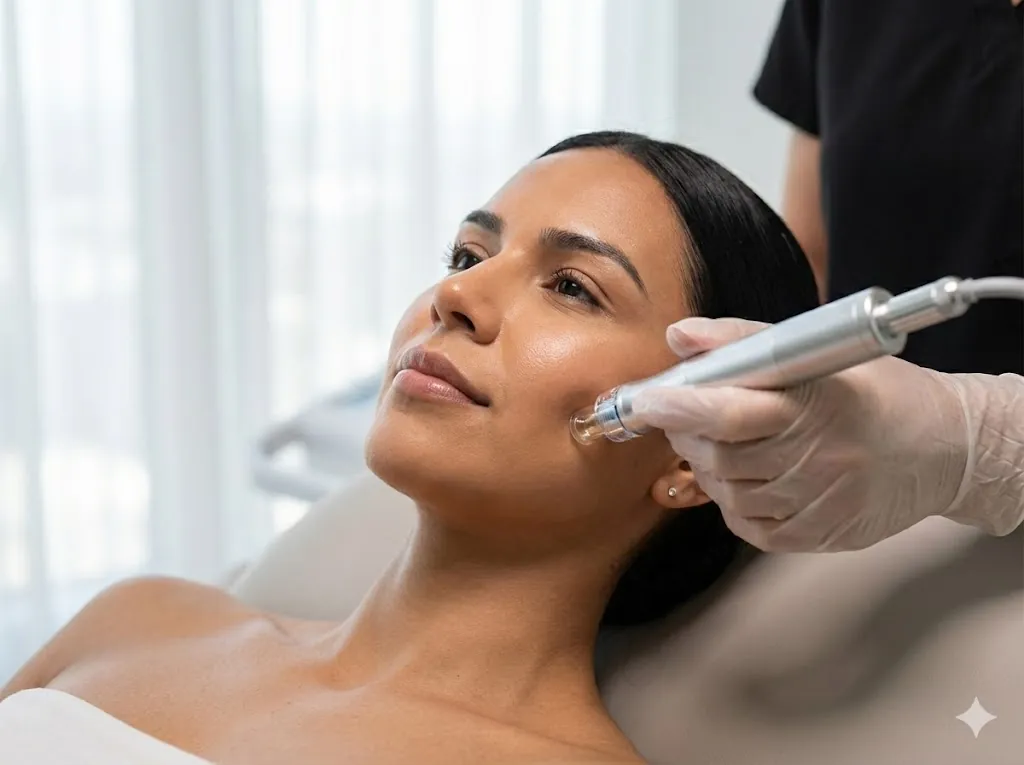
Sylfirm X is a dual-wave radiofrequency microneedling device that delivers RF energy through ultra-fine needles directly into the scarred tissue. What makes it unique is its pulsed wave (PW) and continuous wave (CW) modes, allowing us to customize treatment depth and intensity for different scar types.
How it treats acne scars:
- RF energy heats the deep dermis, triggering robust collagen and elastin remodeling
- Microneedles create controlled micro-channels that break up scar tissue
- The combination of mechanical and thermal injury produces significantly more collagen than either method alone
- Depth-adjustable needles (0.5-4.0mm) allow us to treat scars at their exact level
Best for:
- Boxcar scars (moderate to deep) — the RF energy effectively remodels the fibrotic scar tissue at the base and walls
- Rolling scars — breaks the fibrous bands causing the undulating surface
- PIE (red marks) — the pulsed wave mode specifically targets abnormal blood vessels
- Combination scarring — the dual-mode capability makes it versatile for mixed scar patterns
- All skin tones — unlike some lasers, Sylfirm X is safe for darker skin (Fitzpatrick IV-VI)
Treatment protocol: 3-5 sessions, 4-6 weeks apart Downtime: 2-3 days of redness and mild swelling Expected improvement: 40-70% overall scar improvement after full series
Why choose Sylfirm X: The combination of radiofrequency and microneedling makes this our go-to for moderate to severe atrophic scarring, especially when multiple scar types are present. It's also our preferred choice for patients with darker skin tones who can't safely use certain laser treatments.
2. Microneedling: The Collagen Induction Workhorse
Microneedling (also called collagen induction therapy) uses a device with fine needles to create thousands of controlled micro-punctures in the skin. This triggers the body's wound-healing response, producing new collagen and elastin to fill in depressed scars.
How it treats acne scars:
- Micro-punctures break through the hardened, fibrotic scar tissue
- The wound-healing cascade produces new, healthy collagen to replace scar tissue
- Repeated treatments progressively build collagen, gradually "filling in" depressions
- Can be combined with topical growth factors or PRP for enhanced results
Best for:
- Shallow boxcar scars — the collagen induction effectively fills shallow depressions
- Rolling scars — particularly effective because it disrupts the fibrous bands
- Widespread, mild-to-moderate scarring — great for overall textural improvement across a large area
- PIH (brown marks) — helps normalize melanin distribution through skin turnover
- All skin tones — safe for all Fitzpatrick types when used correctly
Treatment protocol: 4-6 sessions, 4-6 weeks apart Downtime: 1-3 days of redness (less than Sylfirm X) Expected improvement: 30-50% overall improvement after full series
Why choose microneedling: Microneedling is our recommendation for clients with mild-to-moderate, widespread scarring who want a gentler approach with less downtime. It's also excellent as a maintenance treatment after more intensive procedures.
3. PicoWay: The Precision Laser for Pigmented Scars
PicoWay is a picosecond laser that delivers ultra-short pulses of energy (trillionths of a second) to the skin. Unlike traditional lasers that rely on heat, PicoWay uses photoacoustic impact — pressure waves that shatter pigment and stimulate collagen without excessive thermal damage.
How it treats acne scars:
- Photoacoustic energy creates microscopic cavities (LIOBs — Laser-Induced Optical Breakdowns) in the dermis
- These cavities trigger a collagen remodeling response as the body repairs them
- The ultra-short pulse duration minimizes heat spread, reducing the risk of post-inflammatory hyperpigmentation
- Multiple wavelengths (1064nm, 785nm, 532nm) target different chromophores
Best for:
- PIH (brown/dark marks) — the laser energy directly shatters excess melanin deposits
- Shallow atrophic scars with pigmentation — addresses both the color and the depth
- Acne scars on darker skin — the picosecond technology is safer for melanin-rich skin than nanosecond or ablative lasers
- Red/brown discoloration overlying scar tissue
Treatment protocol: 3-6 sessions, 4-8 weeks apart Downtime: 1-2 days of mild redness and possible micro-crusting Expected improvement: 30-60% for pigmented scars; texture improvement is secondary
Why choose PicoWay: PicoWay excels when the primary concern is pigmented scarring — those brown or dark marks that make scars more visible. For pure textural scarring without significant color change, Sylfirm X or microneedling may be more effective.
4. Chemical Peels: The Surface Renewal Option
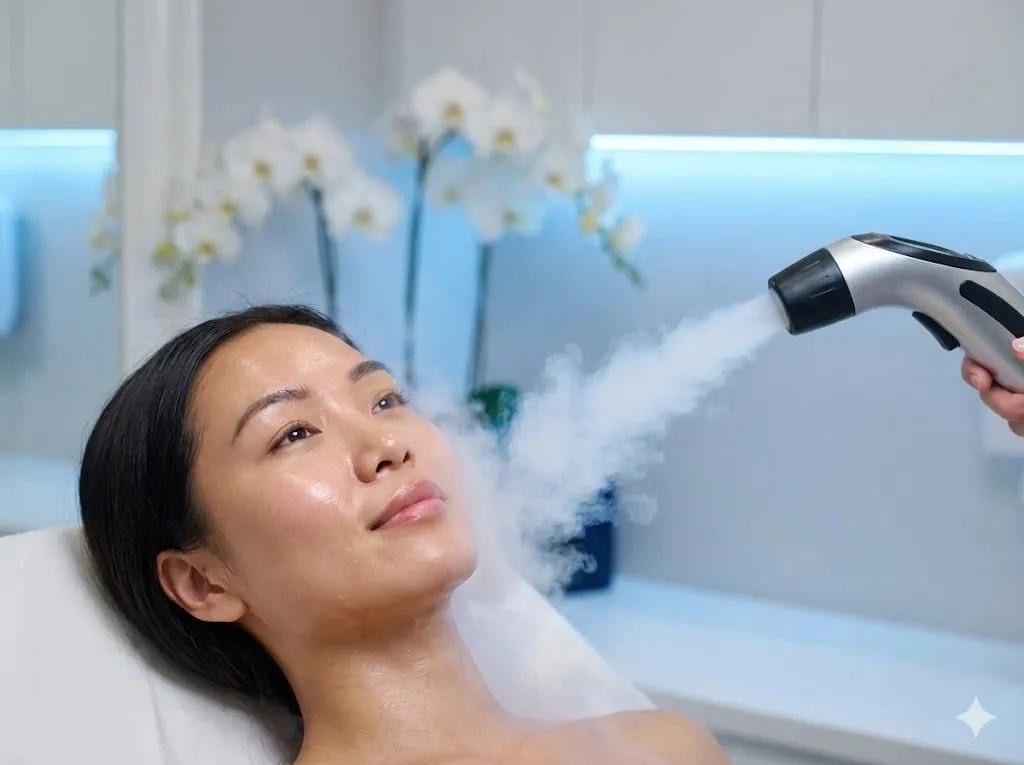
Chemical peels use controlled application of acid solutions (glycolic acid, salicylic acid, TCA, or combination peels) to remove damaged surface layers and stimulate skin renewal.
How they treat acne scars:
- Acids dissolve the damaged outer layers of scarred skin
- Removal of surface tissue triggers regeneration of fresher, smoother skin
- Repeated peels progressively smooth surface irregularities
- TCA CROSS technique (high-concentration TCA applied to individual ice pick scars) is specifically designed for narrow, deep scars
Best for:
- Very shallow scarring and overall skin texture improvement
- PIH (brown marks) — peels accelerate melanin turnover
- Ice pick scars — specifically the TCA CROSS technique, which deposits acid deep into narrow scars
- Clients who want minimal downtime and gradual improvement
- Maintenance treatment between more intensive procedures
Treatment protocol: Series of 4-8 peels, 2-4 weeks apart (depending on peel depth) Downtime: Varies — superficial peels have no downtime; medium peels may cause 3-5 days of peeling Expected improvement: 15-30% for scarring (more effective for pigmentation)
Choosing the Right Treatment: Decision Matrix
| Scar Type | Best Treatment | Why |
|---|---|---|
| Deep ice pick | TCA CROSS + Sylfirm X | CROSS fills the narrow depth; Sylfirm X remodels surrounding tissue |
| Moderate boxcar | Sylfirm X | RF energy remodels scar walls and base effectively |
| Shallow boxcar | Microneedling or Sylfirm X | Both effective; microneedling is gentler |
| Rolling scars | Sylfirm X + subcision | RF breaks fibrous bands; subcision releases tethering |
| PIH (brown marks) | PicoWay + chemical peel | Laser shatters pigment; peel accelerates turnover |
| PIE (red marks) | Sylfirm X (pulsed wave) | PW mode specifically targets abnormal vasculature |
| Mixed scarring | Sylfirm X as primary + complementary treatments | Most versatile for multiple scar types |
| Darker skin tones | Sylfirm X or microneedling | Lowest risk of post-inflammatory hyperpigmentation |
The SkinArtMD Combination Approach
In practice, we rarely use a single treatment for acne scars. The best results come from strategic combinations. Here are our most common combination protocols:
Protocol 1: The Comprehensive Scar Revision
For moderate to severe, mixed-type scarring:
- Session 1-3: Sylfirm X at aggressive settings to kickstart deep collagen remodeling
- Between sessions: Chemical peels to improve surface texture and pigmentation
- Session 4-5: Sylfirm X at moderate settings for continued remodeling
- Maintenance: Microneedling with PRP every 3-4 months
Protocol 2: The Pigmented Scar Protocol
For scars with significant brown or red discoloration:
- Session 1-3: PicoWay to address pigmentation first
- Session 4-6: Sylfirm X to improve texture once pigment clears
- Ongoing: Topical brightening agents and SPF for pigment prevention
Protocol 3: The Gentle Progressive Approach
For mild scarring or sensitive skin:
- Monthly: Alternating microneedling and chemical peels
- After 4-6 sessions: Reassess and add Sylfirm X if needed
- Maintenance: HydraFacial and topical retinoid routine
Results Timeline: What to Expect
| Timeline | What You'll See |
|---|---|
| Week 1-2 | Healing from treatment; may look worse before better |
| Week 3-4 | Skin begins to look smoother and more even |
| Month 2-3 | Collagen remodeling visible; scars appear shallower |
| Month 4-6 | Progressive improvement with each session |
| Month 6-12 | Full collagen maturation; final results visible |
| Year 1+ | With maintenance, results continue to improve |
Important: Acne scar treatment is a journey, not a single event. Most patients achieve their best results over 6-12 months of consistent treatment. Patience is essential.
Preparing for Your First Treatment
To maximize results and minimize complications:
- Get active acne under control first — treating scars while you're still breaking out is ineffective. We'll help with acne management if needed.
- Start a retinoid (if tolerated) 4-6 weeks before treatment to prime your skin for better healing.
- Protect from the sun — UV exposure worsens pigmentation and impairs healing. Daily SPF 50+ is mandatory.
- Stop certain products 3-5 days before treatment (exfoliating acids, retinoids) to reduce irritation risk.
- Be transparent about your history — medications, previous treatments, skin sensitivities. This affects our approach.
Book Your Acne Scar Consultation
Every acne scar story is different, and every treatment plan should be too. Book a consultation at SkinArtMD at Metrotown. Our aesthetic specialists will assess your scar types, skin tone, severity, and goals, then build a customized treatment plan designed to deliver maximum improvement.
Your scars don't define you — but you deserve to feel confident in your skin.
SkinArtMD at Metrotown — Modern aesthetic medicine in Burnaby, BC. Serving Burnaby, Vancouver, New Westminster, Coquitlam, and Metro Vancouver.